

Last month a supplier in Germany refused to sell to a company in Spain. The rule they were afraid of did not apply to either of them.
The buyer needed the material. The seller had it. Both of them wanted the sale, and it did not happen, because neither was sure what the new packaging regulation required and being wrong felt more expensive than losing the order.
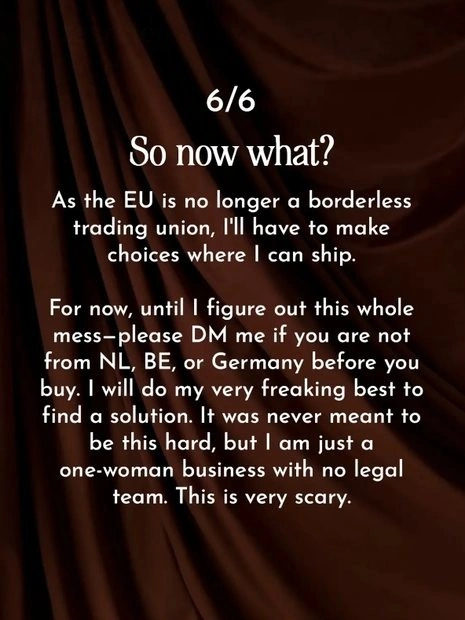
We heard that one from a member of our own community, three weeks after PPWR started applying. It was not the only one. Through August and September small brands across Europe announced publicly that they were pausing shipments to other EU countries, and several of them had no obligation to stop.
If you sell across more than one European market you have probably had a version of that moment. A customer asks for a document you have never produced. You read something about a new rule and cannot tell whether it reaches a company your size. You are not disorganised and you are not behind. You have been reading answers that were written for somebody else's company.


The two things you can buy, and the one everybody is actually doing
Enterprise compliance software
Built for companies that already have a compliance department. Setup runs from high five figures into six. It is priced for the companies you compete with.
A consultant per country
Knows one market properly, charges by the question, and never touches your product data. Multiply by the number of markets you sell into.
Reading and hoping
Searching what you can find, asking in groups, and trusting that you guessed right. This is what most companies your size are doing right now.
None of this is stupid. It is what exists.
Resrcle starts from your company, not from the law
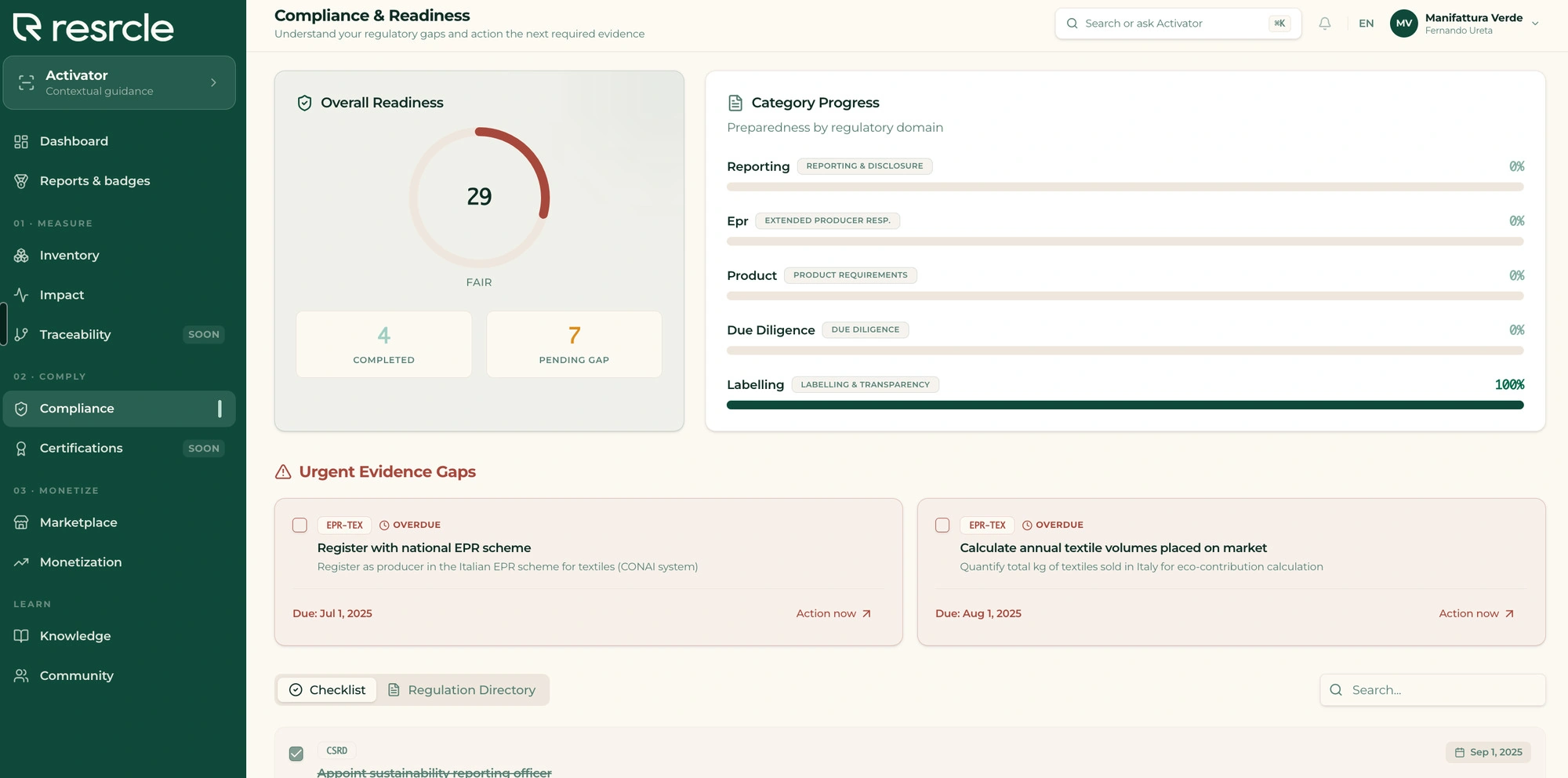
You tell it what you make, where you are registered and which countries you sell into. It maps that against the European rules and the national framework of each market, and gives you a short list instead of a library.
Know what applies to you
Your obligations, country by country, with the dates that matter. Not a summary of European law.
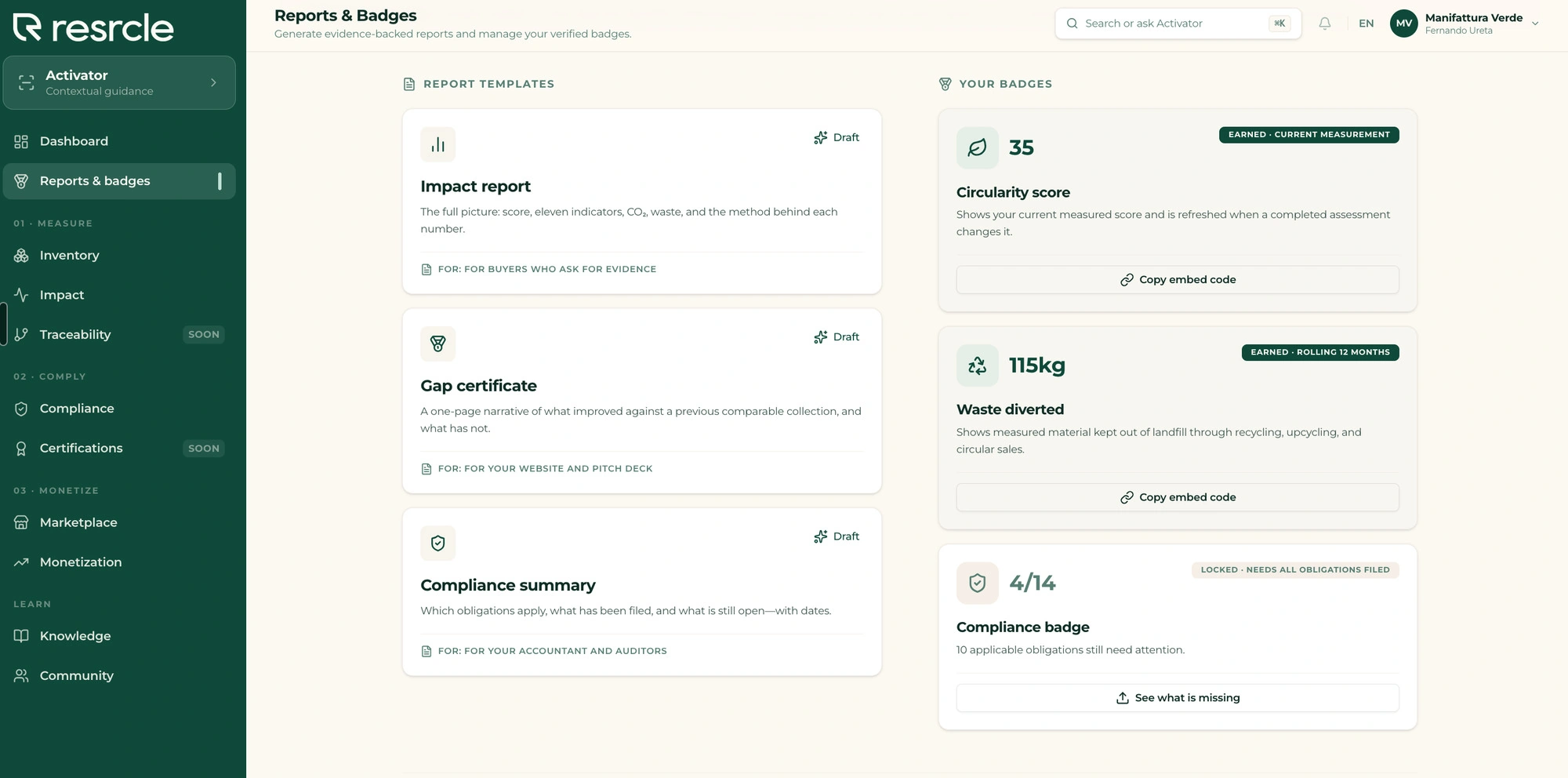
Prepare what each country asks for
Checklists, documents and reports shaped by the market that is asking for them, in the format it wants.
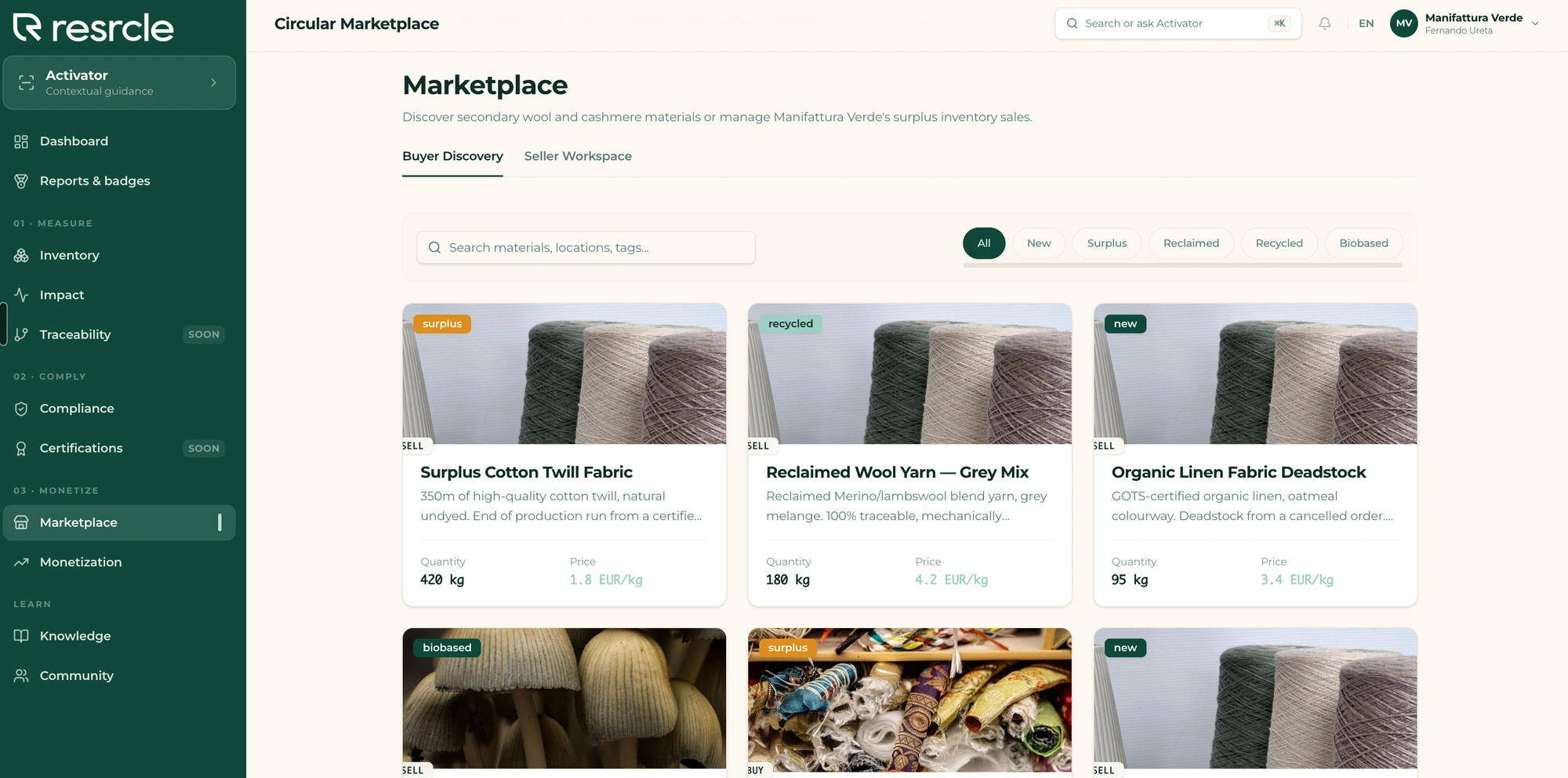
Turn the same data into money
The numbers you collect in order to comply are the numbers a buyer needs in order to purchase your surplus. List it when you are ready.
Three steps, and the first one takes five minutes
Set up your profile
What you make, your size, where you are registered, which markets you sell into, which materials you work with.
See your map
What applies to you, where, what is already in force, and what is coming with the date attached.
Work through it
Tick off the checklist, produce what each market wants, and pick up the surplus side whenever you are ready for it.
We did not start this alone, and we are not running it alone
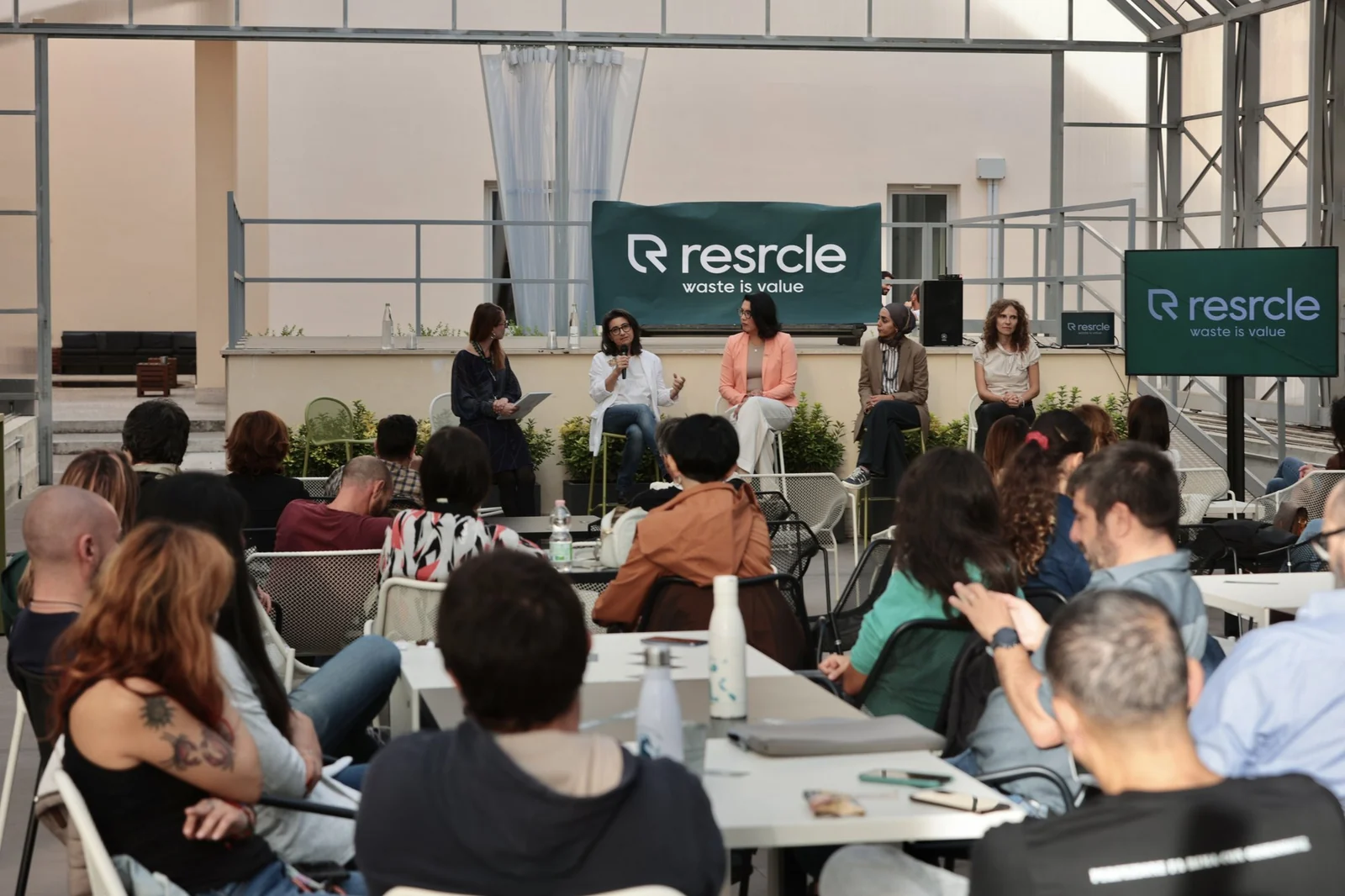
Resrcle grew out of a community of manufacturers, brands, consultants and researchers who have been working on circularity in textiles for years. They tested the tools, argued with our assumptions and told us what was missing. Many of them are still in the room.









This is for you if
- You sell textiles or footwear in more than one EU country
- You manufacture for brands that sell across Europe
- Customers have started asking you for data you do not collect today
It is probably not for you if
You sell only in your own country. That is one national procedure, and your industry association can usually walk you through it. We would rather tell you now than take an hour of your time.
What you get while we build
Resrcle is in pilot. The platform is live, the parts that are not finished run on sample data, and we tell you which parts those are inside the product. Joining now costs nothing and gets you:
Request a demo- Full access to the demo environment, today
- Your company profile mapped against the markets you actually sell into
- A direct line to the three of us rather than a support queue
- A say in what gets built next, because the roadmap is still open
- Early access when the full compliance engine ships
The trade we are offering
No card, no contract, no sales sequence. If you spend ten minutes inside and decide this is not for you, you will still leave knowing more about what applies to your company than a week of searching would have told you.
Five years, and we are still small
Resrcle started as a community of people trying to make circularity work for companies that cannot afford a sustainability department. We built a marketplace, an impact measurement tool and a body of regulatory research, with public funding from NextGenerationEU, the Italian Ministry of Enterprises and Made in Italy, and Invitalia.







Questions
Is this legal advice?
No. We tell you what applies to your company and what to prepare. For a dispute or a formal opinion you need a lawyer, and we can introduce you to people who work in this.
The platform is in pilot. What actually works today?
The profile, the map of obligations by country, the checklists and the reports in draft form. The marketplace is built and has been used by real suppliers, and it is currently paused while we rebuild around it. Anything running on sample data is labelled inside the product.
What does it cost?
Nothing during the pilot. When the engine ships, pricing will be built for companies your size. If you join now you will know the price before anyone else, and you will have helped set it.
My country has not transposed the directive yet. Why look at this now?
Because the preparation takes longer than the deadline suggests. Gathering supplier data for a product passport runs twelve to eighteen months. The deadline is not when you start.
Do I have to connect my ERP?
No. You can start by hand and connect systems later, or never.
What happens to our data?
It stays yours. Costs, prices and the names of your buyers are never shared with other companies on the platform.